
Living-room flooring comparison
HDB Living Room Vinyl Flooring vs Tiles Singapore Guide
Compare the complete floor system, daily comfort and renovation scope before choosing a finish.
Suitability depends on the existing floor, selected product, installation method, connected rooms and household use.
Starting point
Inspect the existing living-room floor first
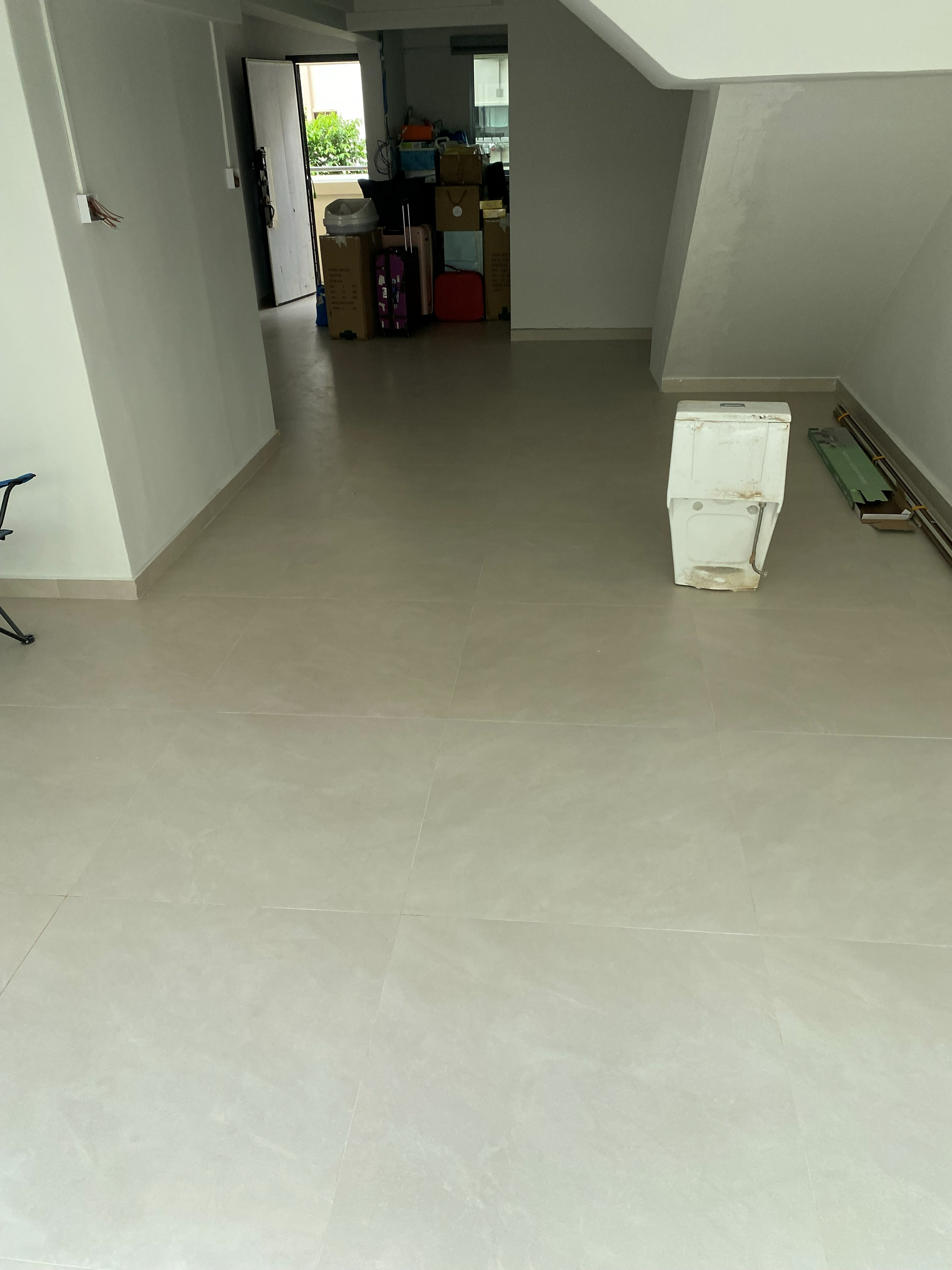
The useful comparison is not only vinyl plank versus ceramic or porcelain tile. Start with the existing HDB floor and the proposed build-up. Note loose or hollow tiles, cracks, deep grout lines, uneven patches, moisture, skirting, balcony or kitchen thresholds and the level at the main door. A stable tiled surface may be suitable for vinyl overlay, while defects can require repair, levelling or removal.
Photograph the whole living room in daylight after rugs and movable items are cleared. Include close views of defects, door tracks and transitions into the corridor, bedrooms and kitchen. Hidden conditions can appear after built-ins or old finishes are removed, so keep a realistic preparation allowance in the budget and schedule.
Overlay and hacking
Compare the disruption of each installation method
Vinyl overlay can reduce demolition when the existing surface is stable, dry, sufficiently level and compatible with the selected product. It may mean less noise, debris and disposal than hacking, which is useful in an occupied HDB. Overlay is not a remedy for loose tiles or major unevenness; those conditions still need a written preparation method.
New tiles commonly involve more wet work, setting-out, adhesive, grout and curing, especially when old finishes are removed. The contractor should explain hacking, disposal, levelling and protection rather than quoting only the visible tiles. Check HDB renovation requirements, permitted hours and lift protection before confirming noisy or debris-producing work.
Comfort and sound
Consider how the living room is used every day
Vinyl often feels warmer and less hard underfoot than tile. That can suit children playing on the floor, older household members or a family that spends long periods in the living and dining area. Product construction, underlay where permitted, installation and the substrate influence the result, so broad claims about softness or sound reduction should be checked against the selected system.
Tiles provide a firm surface that many Singapore households know well and can feel cool in a naturally ventilated room. Hard surfaces can make footsteps, chair movement and dropped objects sound sharper. Rugs, curtains and furniture also affect room acoustics. Compare physical samples and household priorities instead of choosing from appearance alone.
Maintenance and damage
Match cleaning expectations to real household routines
Vinyl should be cleaned according to the product guidance, usually without excessive water or incompatible chemicals. Grit, dragging furniture, sharp objects and concentrated heat can damage a surface. Ask how a local plank repair would be handled after the sofa, TV console and built-ins are in place, and keep spare material from the same batch when practical.
Tiles resist many everyday marks but grout lines can collect dirt or change colour. A chipped tile may be difficult to replace if the model is discontinued. Gloss, texture and grout colour affect cleaning and slip feel. Neither material is maintenance-free, so compare the exact finish and repair route rather than relying on a general material label.
Floor height
Check doors, skirting and connected rooms
Any overlay increases finished floor height. Measure the main door, gate, balcony slider, bedroom doors and transitions to retained flooring. Door cutting, gate adjustment and specialist work may not be included in a basic flooring quote. Threshold strips should sit where they do not interrupt a common walking route or create an awkward edge for a robot vacuum.
Decide whether existing skirting will be retained, removed or covered and how the floor meets fixed TV consoles, wardrobes and kitchen cabinets. A floating floor should not be trapped beneath fixed cabinetry unless the selected system permits it. Tiles also need a planned finished level, skirting detail and transition, particularly where only the living room is being renovated.
Appearance
Review colour, joints and layout in the actual room
Wood-look vinyl can soften a living room and visually connect it with bedrooms or a corridor. Stone-look vinyl offers another option with fewer visible grout lines. Tiles provide many sizes and stone, concrete or wood effects, with grout becoming part of the design. Carry samples from the window to the darker television wall because colour and sheen change with light.
For vinyl, agree on plank direction, pattern variation and doorway transitions. For tiles, review setting-out lines, joint width and the location of narrow edge cuts. Compare the finish beside the sofa, curtains, carpentry and wall colour. A sample viewed in a showroom should not replace an on-site check under the home's actual lighting.
Cost
Compare completed scope rather than surface rates
A meaningful quotation includes measured area, wastage, preparation, hacking or overlay work, disposal, levelling, skirting, trims, door adjustment, furniture movement, access and protection. Ask whether GST, delivery and work outside standard hours are included where relevant. A low square-foot price can exclude work needed to make the living room ready and properly finished.
Vinyl may reduce demolition when overlay is suitable, while tiling can involve more wet work and curing. However, substantial repair can change either total. Compare written methods using the same floor plan and room condition. Also consider future repair material, the cost of moving a heavy sofa or piano and whether connected rooms will be completed now or later.
Renovation sequence
Coordinate flooring with painting and carpentry
Confirm the sequence for demolition, electrical work, ceiling or wall repairs, painting, floor preparation, flooring, carpentry and furniture delivery. Installing the finished floor too early exposes it to ladders, dust and heavy panels. Installing too late can make skirting, fixed cabinets and door adjustments harder to coordinate.
In an occupied HDB, agree who moves furniture and where it will be stored. Large sofas, dining tables, aquariums and TV consoles may prevent one continuous installation. Ask whether staged work is feasible and how joins or transitions will be managed. Leave realistic time for repairs, adhesive or grout curing and product-specific requirements before normal use resumes.
Suitability
Know when each choice may not fit
Vinyl overlay may not be suitable where the substrate is unstable, persistently damp, excessively uneven or incompatible with the selected system. It also may not suit a household expecting immunity from scratches, heat or standing water. Tiles may be less suitable where hacking disruption, wet-work duration, hard underfoot feel or added structural and floor-height considerations conflict with the project.
No material wins every HDB living room. A vacant resale unit with damaged tiles has different priorities from an occupied BTO with a sound floor. Ask the relevant contractor to inspect questionable conditions and state the proposed preparation, product, installation method, exclusions and care requirements before you decide.
FAQ and quote checklist
Prepare the same information for each option
Can vinyl be overlaid on living-room tiles? Possibly, when the tiles are stable, dry and sufficiently level for the system. Is vinyl better than tile? Neither is automatically better; comfort, condition, maintenance, connected rooms, budget and schedule all matter. How long does installation take? Timing depends on area, preparation, furniture, access and the chosen method, so confirm it after site assessment.
Send the HDB floor plan, wide floor photos, close views of defects, thresholds, skirting and doors, furniture details, preferred colour and renovation dates. State whether the home is vacant or occupied and identify lift or working-hour restrictions. WhatsApp +65 8742 6767 for a project-specific vinyl flooring quotation and overlay assessment.