
Does light grey make a room look bigger?
It can help a room feel brighter, but walls, daylight, plank pattern and furniture also influence the result.
Grey vinyl colour guide
Compare grey wood-look vinyl in the actual room before choosing from a catalogue or phone screen.
Lighting, wall colours, furniture and everyday cleaning can change which grey works best.
First comparison
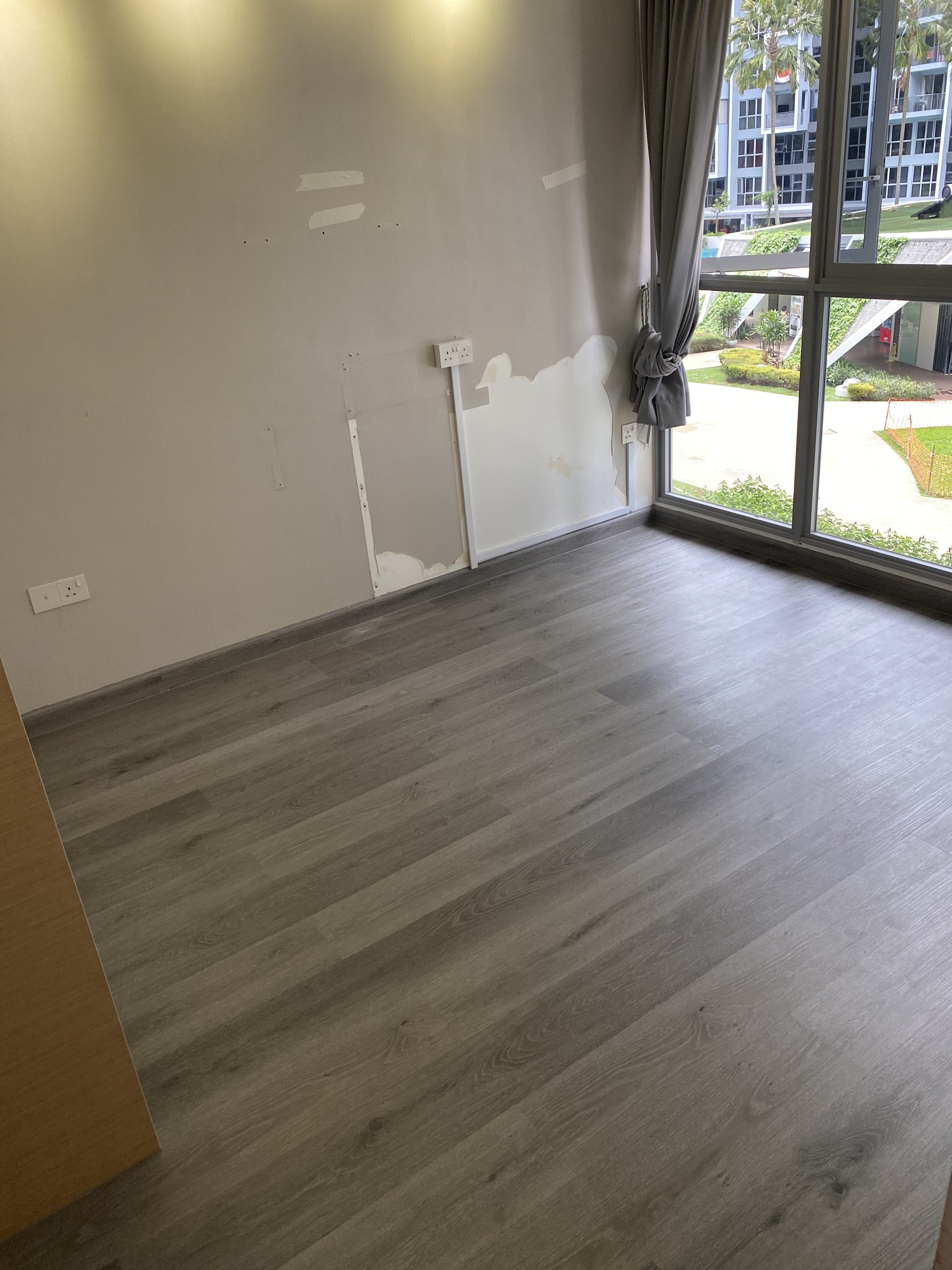
Light grey vinyl can keep a compact HDB bedroom or corridor visually open, especially when walls and large furniture are also light. Dark grey creates stronger contrast and can ground a bright room with pale walls. Neither option automatically makes a home look modern. The grain, undertone, plank width and relationship with existing finishes determine the overall effect.
Start with the room rather than a trend. Photograph walls, doors, wardrobes and curtains in daylight and at night. Note which items will remain after renovation. A colour that looks balanced in an empty showroom may feel colder, darker or busier once a dark wardrobe, grey sofa and patterned curtains are added.
Daylight
Singapore flats differ widely in daylight because of orientation, neighbouring blocks, window size and curtains. Light grey may appear almost white beside a large window but blue in a shaded room. Dark grey can look rich under strong daylight and much heavier after sunset. View a full sample flat on the floor, not held vertically or shown only under showroom lighting.
Move the sample to the window, centre and darkest corner, then check it under the lights used in the evening. Warm lighting can soften a cool grey; cool white lighting may emphasise blue undertones. Take reference photos, but make the final decision from the physical sample because cameras and phone screens alter brightness and colour.
Undertone
Grey flooring is not one neutral colour. Cool greys can contain blue or charcoal undertones, while warm greys may lean taupe or brown. Greige sits between grey and beige and often coordinates more easily with warm wood furniture. Place samples beside the actual skirting, doors and cabinet laminates. Two greys that look similar separately may clash when installed together.
If the home already contains warm oak doors or cream cabinetry, a slightly warm grey may connect more naturally than a blue grey. Black frames and white cabinetry can support cooler finishes, although the room still needs visual balance. Avoid mixing several unrelated grey undertones across floor, walls, sofa and curtains without checking them side by side.
Room use
A living room floor is seen across a larger area and beside the sofa, TV console and dining furniture. Bedrooms may show less exposed flooring after the bed and wardrobe are installed. A dark grey that feels dramatic in an empty bedroom could leave only narrow dark borders around large furniture. A light grey may brighten those visible areas but can feel washed out if every surface is equally pale.
For a continuous floor through the living room, corridor and bedrooms, compare the colour in all connected spaces. Changing shade at every doorway can break visual flow and introduce more transitions. If different colours are needed, decide exactly where the change occurs and how the threshold will be finished. Review the vinyl plank direction guide together with the colour choice.
Maintenance
Very dark, uniform flooring can make pale dust, lint or footprints more noticeable, while very light flooring may reveal dark debris or scuff marks. A mid-grey wood grain with moderate variation may disguise everyday particles better, but cleaning performance also depends on surface texture and household use. Ask how the selected product should be cleaned and follow its care guidance.
Homes with children, pets, wheeled chairs or frequently moved furniture should consider practical protection in addition to colour. Use suitable floor protectors and avoid dragging heavy items. Highly textured designs can create a realistic appearance, but expectations for mopping and dirt at edges should be discussed. Do not choose a colour solely because a small sample appears to hide one type of mark.
Installation
Colour selection does not determine whether vinyl overlay is suitable. Existing tiles or screed should be checked for stability, level differences, moisture concerns and defects. Strong side lighting across a dark or low-sheen floor may make unevenness more visible. Preparation requirements should be assessed before installation rather than hidden by choosing a busier grain.
Overlay also changes finished floor height. Check main and bedroom doors, bathroom thresholds, built-in wardrobes, balcony transitions and skirting. Decide whether existing skirting stays, is replaced or receives another finishing detail. For resale HDB units, read the overlay preparation guide before confirming the material order.
Cost and timing
Light and dark colours in the same product range may have similar base pricing, but the final quotation is affected by measured area, wastage, floor preparation, skirting, trims, furniture movement, access and door work. Special patterns or unavailable colours may change material planning. Ask for the product reference and confirm current availability before arranging other renovation dates.
Installation timing depends on site readiness and scope. Painting, carpentry and wet work should be coordinated so the new floor is not damaged or repeatedly uncovered. Condo projects may also need management approval, lift protection and permitted work hours. Read the renovation sequence guide before fixing the move-in date.
Shortlist
Shortlist one light grey, one mid-grey and one dark grey from a suitable product range. View them together in each room and remove colours that conflict with fixed finishes. Then compare the remaining options with the largest furniture surfaces. Ask everyone making the decision to view the same physical samples rather than forwarding separate catalogue screenshots.
Record the chosen product name or code in the quotation and retain the reference after installation. Natural batch variation and future availability should be discussed if later repairs are a concern. Avoid selecting a colour based on an edited inspiration photo or a promise that one shade will always make the unit look larger, cleaner or more valuable.
Quote checklist
Send the floor plan, daylight and evening room photos, current floor close-ups, thresholds, skirting, doors and furniture colours. State whether the unit is a BTO, resale HDB, condo or rental, which rooms are included, whether furniture remains and the target installation period. Include photos of the shortlisted samples in the actual room.
Glee Flooring can then discuss product options, overlay suitability, preparation and finishing scope. The final choice should follow sample review and site conditions. WhatsApp +65 8742 6767 with the plan, photos and preferred grey tones for a project-specific quotation.
FAQ
It can help a room feel brighter, but walls, daylight, plank pattern and furniture also influence the result.
Some dark uniform finishes show pale dust more clearly. Grain variation and cleaning habits also matter.
Send the floor plan, room and floor photos, thresholds, furniture colours, shortlisted samples and timing.
Send the floor plan, room photos and shortlisted samples for a practical quote.